Discover Switzerland & Tanzania

Switzerland
We invite you to explore everything Switzerland has to offer on the official Swiss Federal Department for Foreign Affairs website:

Tanzania
We invite you to explore everything Tanzania has to offer on the official Swiss State Secretariat for Economic Affairs website:
Should you have any further questions, we would be happy to assist you.
Trade Agreements and Exchanges
- Switzerland and Tanzania have enjoyed long-standing economic relations, framed by several bilateral agreements. Notably, this includes the Agreement between the Swiss Confederation and the United Republic of Tanzania on the Promotion and Reciprocal Protection of Investments (l’Accord entre la Confédération suisse et la République-Unie de Tanzanie concernant la promotion et la protection réciproque des investissements), signed on April 8, 2004.
- Future Agreements: The STCC views the improvement and development of the business climate and framework as one of its main missions. This is why it is committed to advocating for new agreements between Switzerland and Tanzania. In 2024, the STCC initiated consultations with its members to create the foundation necessary for the signing of a Double Taxation Agreement and a Technical Barriers to Trade Agreement (TBT).
East African Community (EAC)
Overview
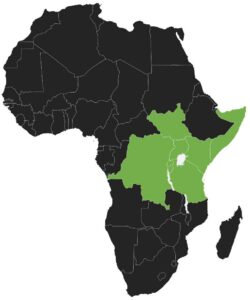
The East African Community (EAC) is a regional intergovernmental organization made up of eight countries:
- Tanzania
- Burundi
- Democratic Republic of Congo (DRC)
- Kenya
- Rwanda
- Somalia
- South Sudan
- Uganda
Together, these countries represent a market of more than 350 million people, making the EAC one of Africa’s fastest-growing and most integrated economic regions. For Swiss businesses, the EAC serves as a gateway not only to these eight nations but also to the wider African Continental Free Trade Area (AfCFTA).
Why the EAC matters
The EAC aims to make trade, investment, and the movement of people and goods easier across the region. Key pillars include:
1. Customs Union (2005)
The Customs Union was the first major step toward integration. Under this framework:
Goods can move within the EAC with zero or reduced internal tariffs, depending on eligibility. All member states apply a Common External Tariff (CET) on imports from outside the region.
Implementation is ongoing, particularly in addressing non-tariff barriers and fully harmonizing the CET across all countries.
2. Common Market (2010)
The Common Market Protocol allows the free movement of people, labour, services, capital, and goods within the EAC. While the Protocol is legally in force and significant progress has been made, full implementation is still underway, with some restrictions that partner states continue to address.
3. Monetary Union (Ongoing)
The East African Monetary Union Protocol, signed in 2013, outlines the process toward adopting a single regional currency. This involves harmonizing monetary and fiscal policies across member states and meeting agreed convergence criteria. The Monetary Union is progressing in stages, and its final implementation will depend on readiness across all partner states.
Investment Opportunities
The EAC’s expanding market and focus on industrialization offer strong opportunities for Swiss companies, including:
- Infrastructure: Transport corridors, logistics development, energy projects, and ICT systems.
- Agribusiness & Manufacturing: Agro-processing, value-addition, equipment, and precision machinery.
- Financial Services: Banking, insurance, fintech solutions, and trade-finance services.
Trade and Economic Considerations
Companies should note that trade conditions vary depending on the export destination:
- United States (AGOA): Several EAC countries have benefitted from the African Growth and Opportunity Act (AGOA), which provides duty-free access for eligible products. Eligibility is reviewed periodically and varies by country.
- European Union (EPA & EBA): Kenya has a bilateral Economic Partnership Agreement (EPA) with the EU. Other EAC members classified as Least Developed Countries have traded with the EU under the Everything But Arms (EBA) scheme, which gives duty-free, quota-free access.
- Switzerland: There is no single EAC-wide trade agreement with Switzerland. Trade typically operates under EFTA arrangements or bilateral frameworks between Switzerland and individual African countries.
The Switzerland–Tanzania Chamber of Commerce (STCC) supports businesses seeking to enter or grow within Tanzania and the wider East African Community. While Tanzania is the core focus, the STCC is connected to regional networks such as the East African Business Council and works closely with economic attachés from Swiss embassies across the region.
Through these partnerships, the STCC acts as a bridge for companies navigating the East African market. It helps members understand regulatory differences, identify local partners, and explore opportunities across multiple EAC countries fostering collaboration and regional growth.
Not yet a member?
Click here to become a member of a strong and dynamic business community alongside other Swiss and Tanzanian companies in Tanzania!
You’ll gain valuable business contacts and access to an institutional network that will help you grow your business in Africa!